
Can’t Settle at Bedtime? It Might Be Restless Legs Syndrome (RLS)
If you lie down exhausted and still can't get comfortable — because your legs feel restless, crawly, or impossible to keep still — it's easy to blame stress or a long day. Sometimes the pattern fits restless legs syndrome (RLS), also called Willis-Ekbom disease: a sleep-related urge to move the legs that often worsens at night.
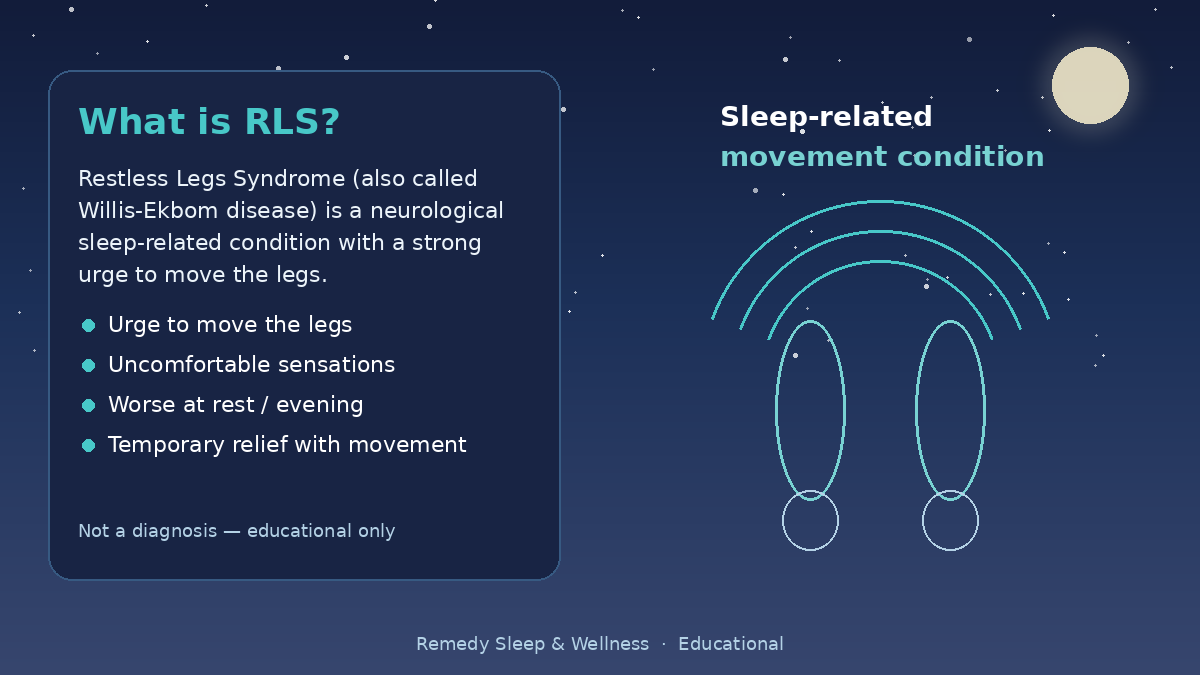
What is RLS?
In RLS, people feel a strong urge to move the legs, often with uncomfortable sensations (crawling, tingling, pulling, aching, or a hard-to-describe need to move). Symptoms typically:
• Get worse at rest (sitting still or lying in bed)
• Feel better temporarily with movement (walking or stretching)
• Are more noticeable in the evening or night
Many people also have brief, repetitive leg movements during sleep that can fragment rest. RLS is diagnosed clinically from the symptom pattern — there isn't a single blood test that confirms it alone.
How common is it?
Estimates vary with how RLS is defined. Specialty reviews often note that a smaller share of adults have symptoms frequent or severe enough to need treatment — one recent clinical review framed that as roughly 1 in 30 adults. Sleep disruption is common when symptoms are clinically meaningful.
Warning signs worth a sleep evaluation
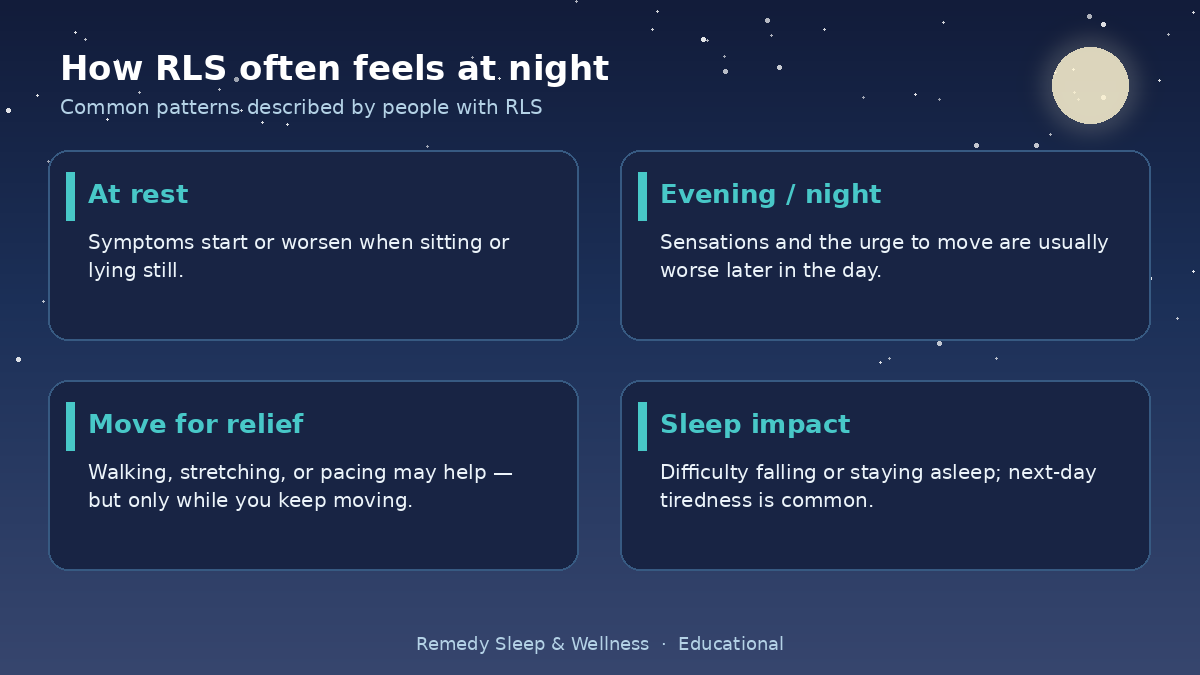
• Urge to move the legs at night, with or without crawling/tingling sensations
• Symptoms that ease with walking or stretching, then return when you lie back down
• Trouble falling asleep or frequent nighttime awakenings
• Daytime tiredness, fogginess, or irritability after restless nights
• Symptoms that worsen with certain medicines, low iron stores, pregnancy, kidney disease, or untreated sleep apnea
These don't diagnose RLS alone — they raise pretest probability and are a reason to talk with a sleep clinician. Look-alikes (night cramps, neuropathy, medication-related restlessness) can share pieces of the story.
Why untreated RLS matters
When symptoms steal bedtime, sleep quality suffers. People may take longer to fall asleep, wake repeatedly, and feel unrefreshed the next day. Chronically broken sleep affects daytime function, mood, and quality of life. The good news: once the pattern is recognized, evaluation can clarify next steps and address contributors such as iron status, aggravating medicines, and other sleep disorders.
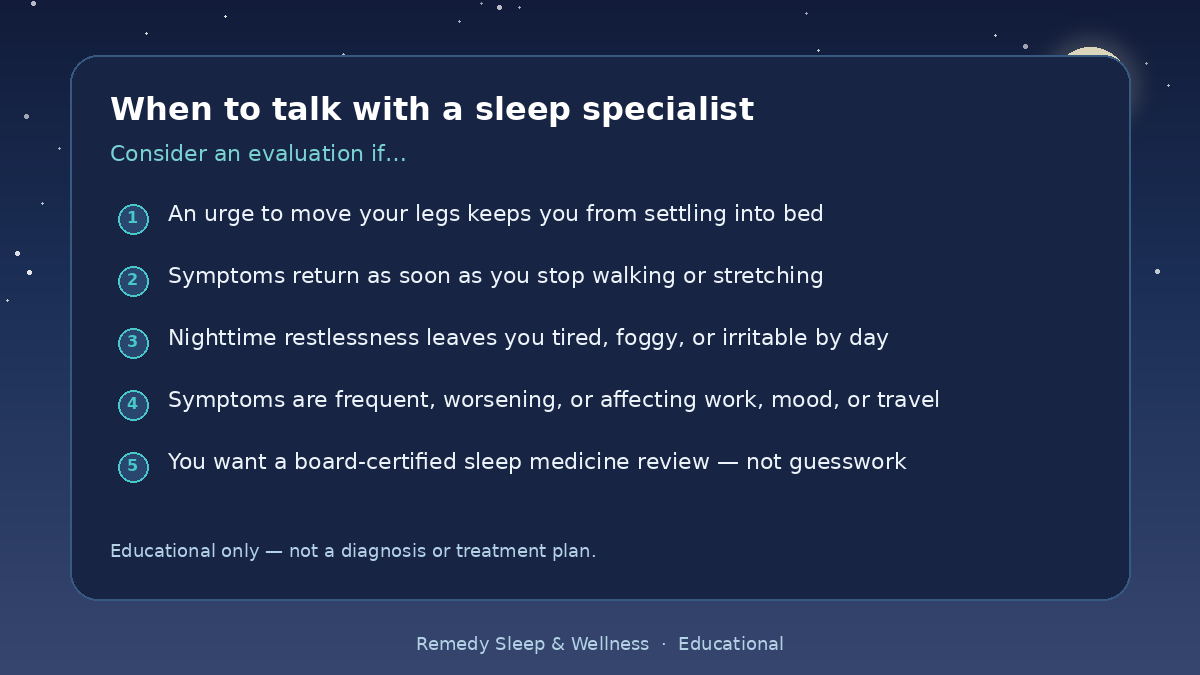
How evaluation usually works
A sleep medicine visit usually starts with a detailed history: timing, relief with movement, sleep impact, medicines, and medical context. Clinicians may check iron studies (including ferritin and transferrin saturation) when RLS is clinically significant, review aggravating factors, and screen for other sleep problems such as obstructive sleep apnea. Specialty guidance — including the 2025 American Academy of Sleep Medicine (AASM) clinical practice guideline — emphasizes individualized care rather than a one-size-fits-all plan.
How we approach this at REMedy
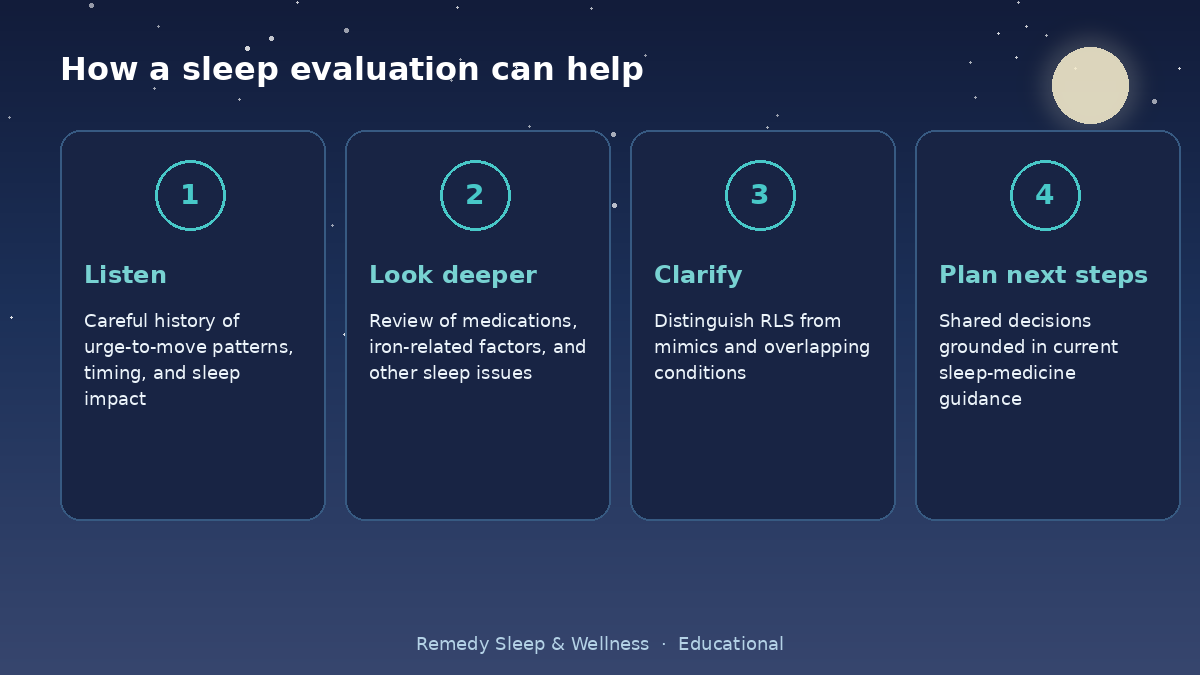
Care often starts with a telehealth consult. Dr. Luis M. Guevara is double board-certified in Sleep Medicine and Family Medicine. We listen for the classic urge-to-move pattern, look for remediable contributors, and discuss evidence-informed options in plain language — lifestyle measures and iron evaluation when appropriate, and other therapies only when clinically indicated. Treatment decisions belong in a clinician–patient conversation.
Next step
Call: (210) 605-4266
Serving patients across Texas via telehealth. Accepted insurance includes BCBS, Curative, Ambetter, UHC, and Medicare, plus self-pay options.
— Luis M. Guevara, DO
Board-certified, Sleep Medicine & Family Medicine
REMedy Sleep & Wellness
References
Winkelman JW, Wipper B. Restless Legs Syndrome: A Review. JAMA. 2026. https://jamanetwork.com/journals/jama/fullarticle/10.1001/jama.2025.23247
Winkelman JW, Berkowski JA, DelRosso LM, et al. Treatment of restless legs syndrome and periodic limb movement disorder: an American Academy of Sleep Medicine clinical practice guideline. J Clin Sleep Med. 2025;21(1):137-152. https://doi.org/10.5664/jcsm.11390
American Academy of Sleep Medicine. Summary of new clinical practice guideline for RLS and PLMD. https://aasm.org/summary-of-new-clinical-practice-guideline-for-rls-and-plmd/
Manconi M, et al. Restless legs syndrome. Nature Reviews Disease Primers. 2021. https://doi.org/10.1038/s41572-021-00311-z
National Institute of Neurological Disorders and Stroke (NINDS). Restless Legs Syndrome. https://www.ninds.nih.gov/health-information/disorders/restless-legs-syndrome
MedlinePlus Medical Encyclopedia. Restless legs syndrome. https://medlineplus.gov/ency/article/000807.htm
Educational content only. Not medical advice or a diagnosis. Clinical framing cross-checked with OpenEvidence (September 2026).